When Narendra Modi, Prime Minister of India, launched the PM Surya Ghar Muft Bijli YojanaIndia in January 2024, he promised a simple but ambitious goal: free electricity for millions of households. It’s not just a political slogan; it’s a massive infrastructure shift aimed at installing solar panels on 1 crore (10 million) rooftops across the country. The plan? Give eligible families up to 300 units of free power every month while cutting their bills and boosting national energy independence.
Here’s the thing: this isn’t just about saving money on bills. It’s about reshaping how India consumes energy. With rising electricity costs and a push toward green goals, the government is betting big on decentralized power. So far, the numbers are moving fast. Within less than a year of the launch, over 1.45 crore registrations have been recorded, with more than 8.46 lakh installations already completed. That’s a lot of rooftops getting wired up.
How the Subsidy Structure Works
The financial incentive is straightforward, designed to lower the barrier to entry for middle-class and low-income families. Under the scheme, beneficiaries receive direct subsidies transferred into their bank accounts after installation verification. The amount depends on the capacity of the solar plant installed:
- 1 kW system: ₹30,000 subsidy
- 2 kW system: ₹60,000 subsidy
- 3 kW system: ₹78,000 subsidy (maximum cap)
This tiered approach ensures that even those who can only afford smaller setups get significant support. For context, a typical household consuming between 150 to 300 units monthly would likely opt for a 2-3 kW system, making the ₹60,000–₹78,000 aid crucial for offsetting upfront costs. The transparency of direct bank transfers aims to eliminate leakage, a common issue in earlier welfare programs.
The Economic Impact: Savings and Investment
Let’s talk numbers. The Indian government has committed over ₹75,000 crore ($9 billion approx.) to this initiative. But what does that mean for the average citizen? Analysts estimate that providing 300 units of free electricity to 1 crore households could save families approximately ₹15,000 crore annually. That’s real money staying in pockets instead of going to distribution companies.
But wait, there’s more. Homeowners aren’t just consumers anymore; they’re producers. If your roof generates more power than you use, you can sell the excess back to the grid. This creates a secondary income stream, turning your home into a mini-power plant. It’s a clever twist that aligns personal savings with national grid stability.
Digital Infrastructure and Banking Support
The application process has been digitized to reduce red tape. Citizens apply through the National Portal for Rooftop Solar or via an official Android app developed by Digital India Corporation. The platform allows users to register, upload documents like Aadhaar cards and electricity bills, and track their application status seamlessly.
Financing is another hurdle cleared by the scheme. Banks like Indian Bank have introduced specific loan products tailored for rooftop solar installations. These loans require a CIBIL score of 680 or higher, though new-to-credit customers are also considered. This partnership between public sector banks and the ministry ensures that lack of capital doesn’t stop adoption.
Challenges and On-the-Ground Reality
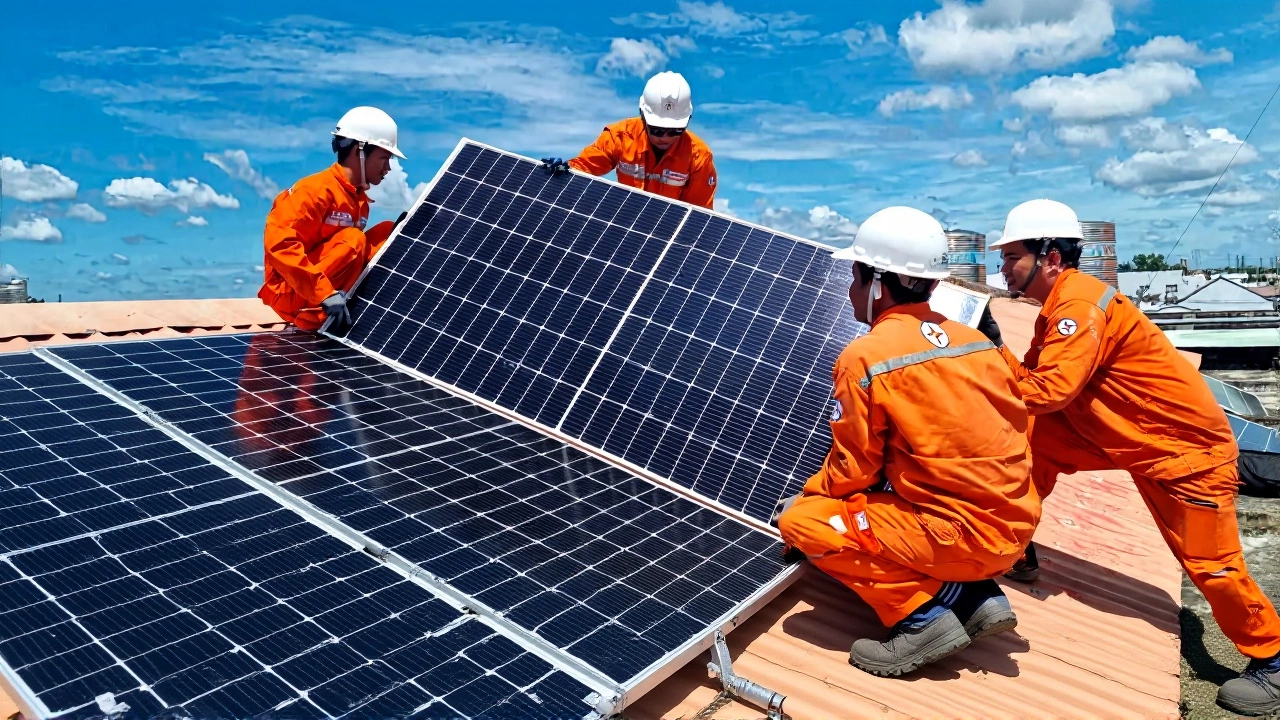
While the data looks promising, implementation isn’t without its glitches. Reports from states like Uttar Pradesh highlight rapid rollout efforts led by agencies like UPNEDA (Uttar Pradesh New Energy Development Agency). However, some users have faced delays in grid connectivity after panel installation. While specific widespread complaints about "technical issues" or "bank officer resistance" remain anecdotal in current reports, the sheer scale of deployment inevitably brings logistical friction. Ensuring last-mile connectivity remains the biggest test for the Ministry of New and Renewable Energy.
Why This Matters for India’s Future
This scheme is a cornerstone of India’s broader climate strategy. By adding an estimated 30 gigawatts of additional solar capacity, the nation moves closer to its net-zero targets. It reduces reliance on fossil fuels, cuts carbon emissions, and creates jobs in the renewable sector. From a geopolitical angle, energy independence reduces vulnerability to global oil price shocks.
For the average Indian family, it’s about relief. Inflation has hit hard, and electricity bills are a fixed cost that rarely shrinks. PM Surya Ghar offers a permanent solution rather than a temporary fix. Whether it achieves its target of 1 crore homes by March 2027 will depend on sustained bureaucratic efficiency and public awareness.
Frequently Asked Questions
Who is eligible for the PM Surya Ghar scheme?
Any Indian citizen who owns a house with a suitable roof for solar panel installation is eligible. You must have a valid electricity connection and not have availed benefits from any other solar subsidy scheme previously. Priority is given to middle-income and lower-income groups, but all castes and communities can apply. Applicants must be above 18 years of age.
How much subsidy can I get for a 3kW solar system?
The maximum subsidy available under the scheme is ₹78,000 for a 3 kilowatt (kW) solar plant. For smaller systems, the subsidy is ₹30,000 for 1 kW and ₹60,000 for 2 kW. This amount is directly transferred to the beneficiary’s bank account after successful installation and verification.
Can I sell excess electricity generated by my solar panels?
Yes, one of the key features of the scheme is net metering. If your rooftop solar system generates more electricity than your household consumes, the excess power is fed back into the grid. You can earn credits or income from selling this surplus electricity, depending on local utility policies.
What documents are required to apply online?
To apply via the National Portal for Rooftop Solar, you need your Aadhaar card, latest electricity bill, bank passbook (linked to Aadhaar), mobile number, email ID, passport-size photo, and proof of residence. Some states may also require an income certificate or ration card to verify eligibility categories.
Is there a loan option available for installing solar panels?
Yes, several banks including Indian Bank offer specialized low-interest loans for rooftop solar installations under this scheme. Applicants typically need a CIBIL score of 680 or higher, though new-to-credit individuals may also qualify. These loans help cover the initial setup costs beyond the government subsidy.